


How to Prevent Erosion Around Granite Steps on Sloped Cottage Properties
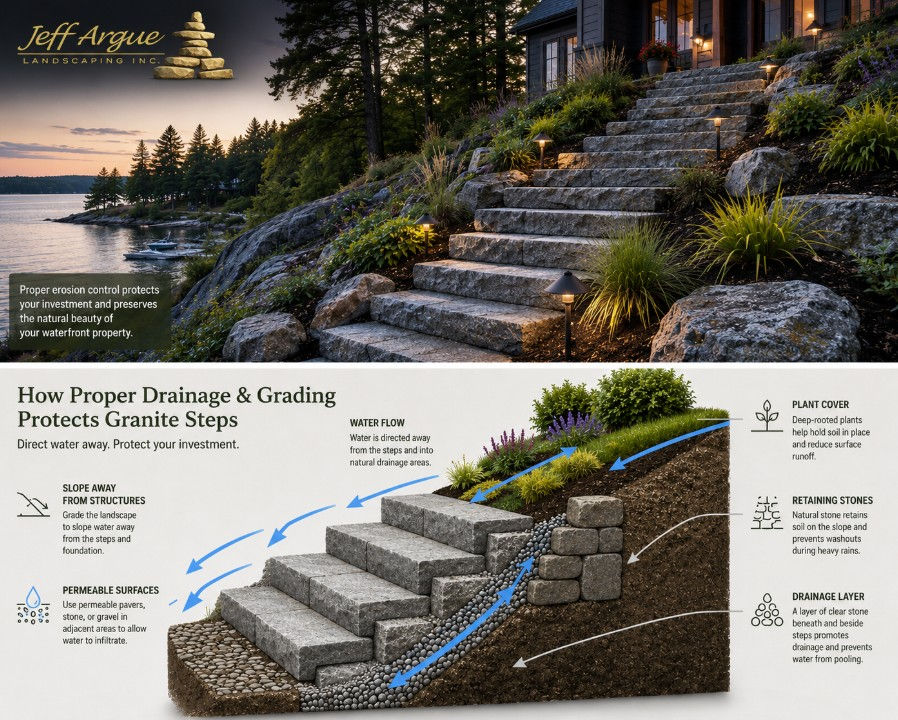
Granite steps are one of the most beautiful and durable ways to navigate elevation changes on a cottage property. Whether your cottage overlooks the sparkling waters of Georgian Bay or sits on the rugged terrain of Muskoka, granite steps create a timeless natural look that blends perfectly with the surrounding landscape. However, sloped waterfront properties come with a unique challenge: erosion.
Without proper planning, heavy rainfall, spring thaw, runoff, and changing terrain can slowly wash away soil around your granite steps. Over time, this can lead to unstable steps, drainage issues, exposed roots, muddy pathways, and even safety hazards. Signs your cottage landscape has drainage problems.
The good news? Erosion can absolutely be prevented with smart landscape design and professional installation.
If you own a sloped cottage property, here’s how to protect your investment and keep your granite steps looking beautiful for years to come.
Why Erosion Happens Around Granite Steps
Erosion occurs when water moves soil from one area to another. On flat properties, this tends to happen slowly. But on sloped cottage lots, gravity speeds everything up.
Common causes include:
heavy rainstorms
spring snowmelt
poor drainage design
improper grading
exposed soil
foot traffic wear
unstable surrounding landscaping
lack of retaining support
Waterfront properties are especially vulnerable because many cottage lots have steep elevations leading toward the shoreline. If water is allowed to run directly beside or underneath granite steps, it can gradually wash away supporting soil. Eventually, the steps may shift, settle unevenly, or become unsafe.
1. Start with Proper Grading
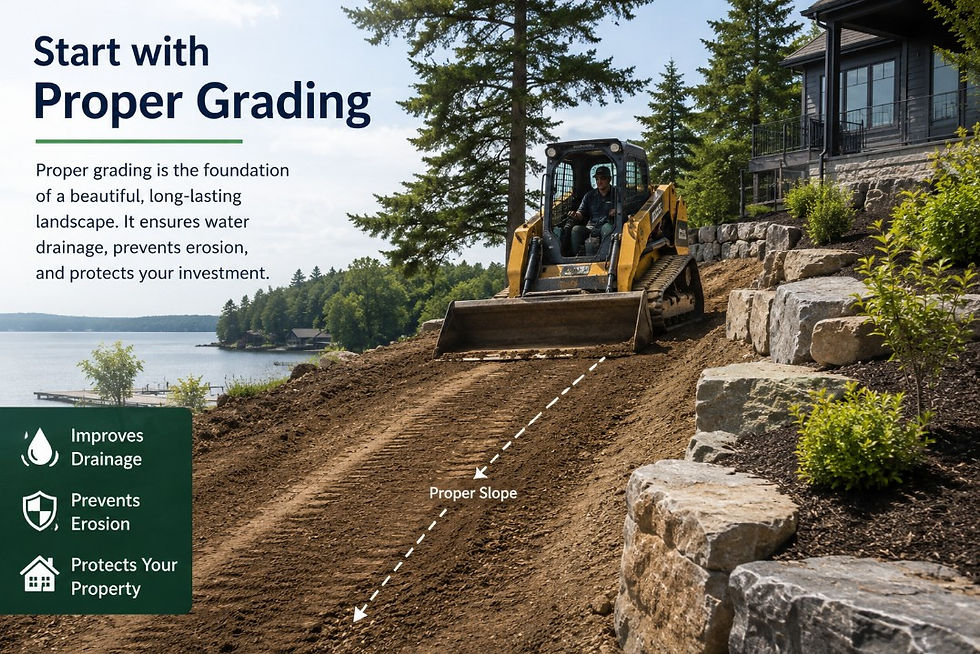
The first and most important defense against erosion is proper grading. Grading means shaping the land so water flows where you want it to go instead of where nature decides. A common mistake is allowing runoff to travel directly down the same slope as the granite steps. When this happens, the steps become a channel for moving water. Instead, the surrounding landscape should be graded to direct runoff away from the staircase and toward designated drainage areas.
Proper grading helps:
reduce washouts
prevent pooling
protect the step foundation
improve long-term stability
minimize muddy runoff
On sloped cottage properties, grading must be carefully designed to work with the terrain, not against it.
2. Install Drainage Behind and Around the Steps

Water is the enemy of slope stability. Even if the surface looks dry, underground water movement can slowly destabilize the surrounding soil. That’s why proper drainage is critical.
Effective drainage systems may include:
Drainage Stone
Clear drainage stone beneath and around the granite steps allows water to move through the system instead of building pressure.
Benefits:
reduces hydrostatic pressure
improves drainage flow
prevents trapped moisture
helps stabilize the installation
French Drains
A French drain captures and redirects excess water away from erosion-prone areas.
This is especially useful for:
hillside properties
areas with heavy runoff
cottage entrances on steep slopes
Swales
A swale is a shallow graded drainage channel that redirects water naturally.
This solution blends well into landscaped cottage properties and can be softened with plantings.
Catch Basins
For properties with significant water movement, catch basins may be used to collect and control runoff.
3. Use Retaining Walls for Slope Stabilization

If your granite steps are installed on a steep incline, retaining walls may be essential.
Retaining walls help hold back soil and prevent the slope from shifting over time. Without retaining support, loose soil can gradually collapse beside the staircase.
Retaining walls can:
stabilize surrounding terrain
reduce erosion
create cleaner transitions
improve drainage control
add visual structure
For luxury cottage landscapes, natural stone retaining walls pair beautifully with granite steps. This creates a cohesive, high-end hardscape design that feels intentional and timeless.
4. Add Deep-Rooted Plantings for Natural Soil Reinforcement

Plants do more than make your property look beautiful. Their root systems help anchor soil in place. This is one of the most natural and effective erosion-control strategies.
Good erosion-control landscaping includes:
ornamental grasses
native shrubs
ground cover plants
deep-rooted perennials
low-maintenance softscape installations
Plant roots help:
hold loose soil together
slow water movement
reduce washouts
absorb moisture
improve slope stability
This is especially effective around granite steps where exposed soil would otherwise remain vulnerable. For Muskoka and Georgian Bay properties, choosing plants suited to local conditions is important for long-term success.
5. Avoid Large Areas of Bare Soil

Bare soil is an invitation for erosion. Every heavy rain event becomes an opportunity for soil loss. If your granite steps are surrounded by exposed dirt, the slope is far more likely to wash out.
Instead, protect vulnerable areas with:
mulch
decorative stone
natural boulders
softscaping
ground cover vegetation
These materials help slow water movement while protecting the soil surface. Decorative natural stone works especially well with granite hardscaping because it maintains the upscale cottage aesthetic.
6. Build Granite Steps with Proper Foundation Preparation
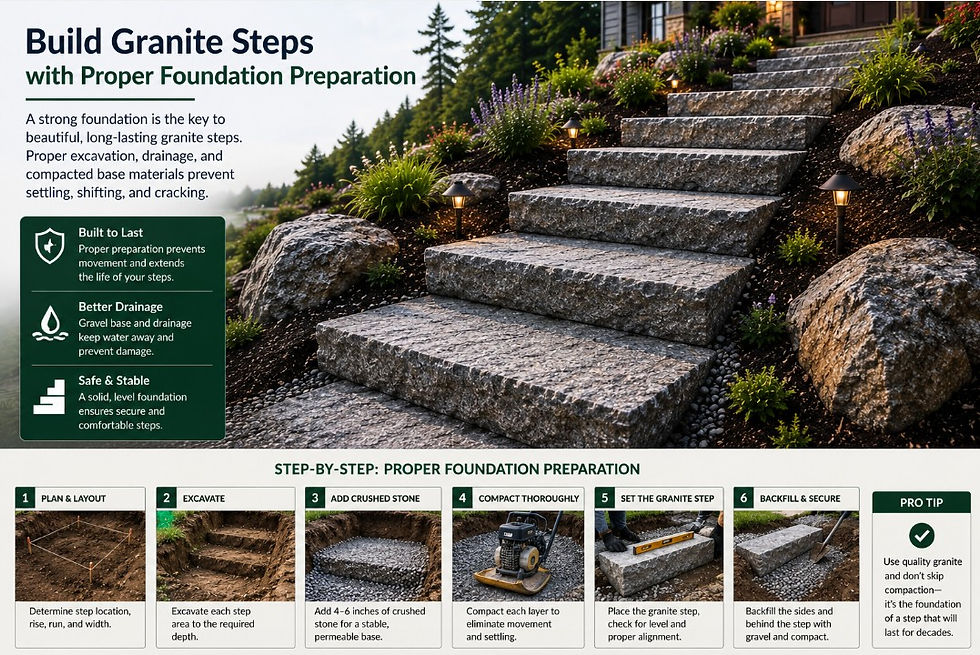
Beautiful granite steps are only as strong as what’s underneath them. Poor installation is one of the biggest causes of movement and erosion issues.
Proper preparation may include:
excavation
compacted structural base
drainage stone layers
slope reinforcement
strategic water management
If granite steps are simply placed onto unstable soil without proper preparation, problems often appear much sooner.
These may include:
step settling
uneven risers
shifting treads
surrounding washouts
water pooling
Professional installation helps ensure the structure performs as beautifully as it looks.
7. Redirect Roof and Downspout Runoff

Many cottage owners focus on the hillside, but forget about roof water. A surprising amount of erosion starts because downspouts discharge directly near pathways or steps. During heavy rain, this concentrated water flow can quickly overwhelm the surrounding landscape.
Solutions include:
downspout extensions
buried drainage lines
dry wells
redirecting runoff to safer discharge areas
This simple fix can dramatically reduce erosion risk.
8. Inspect After Heavy Weather
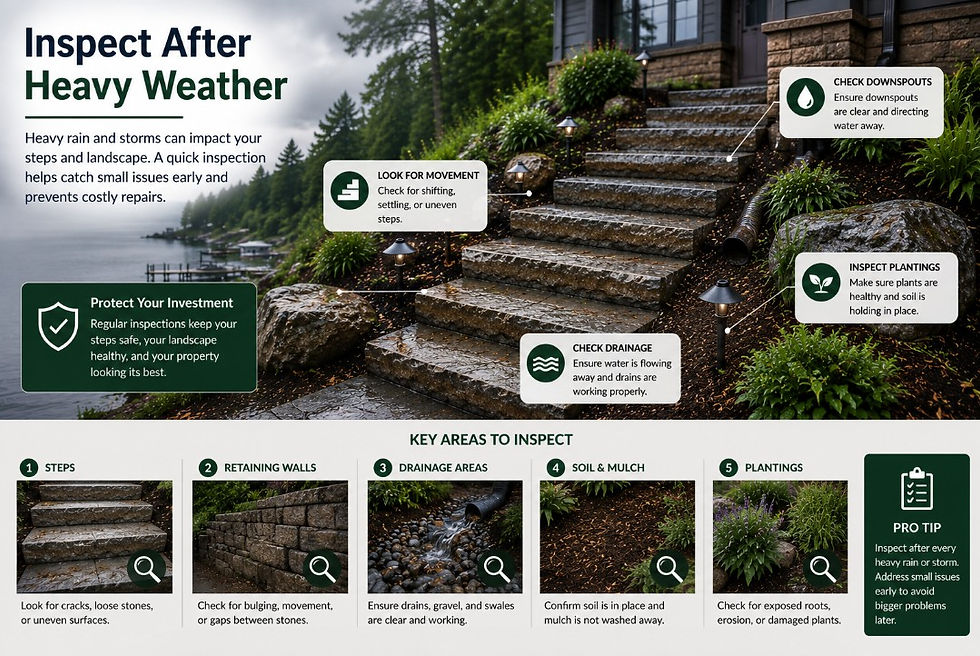
Even professionally installed granite steps should be monitored. Extreme weather can reveal drainage issues before they become expensive repairs.
Watch for:
exposed roots
washed-out mulch
muddy runoff trails
pooling water
shifting stones
leaning edges
cracks in adjacent retaining structures
Early detection can prevent larger problems later.
9. Design for the Waterfront Environment
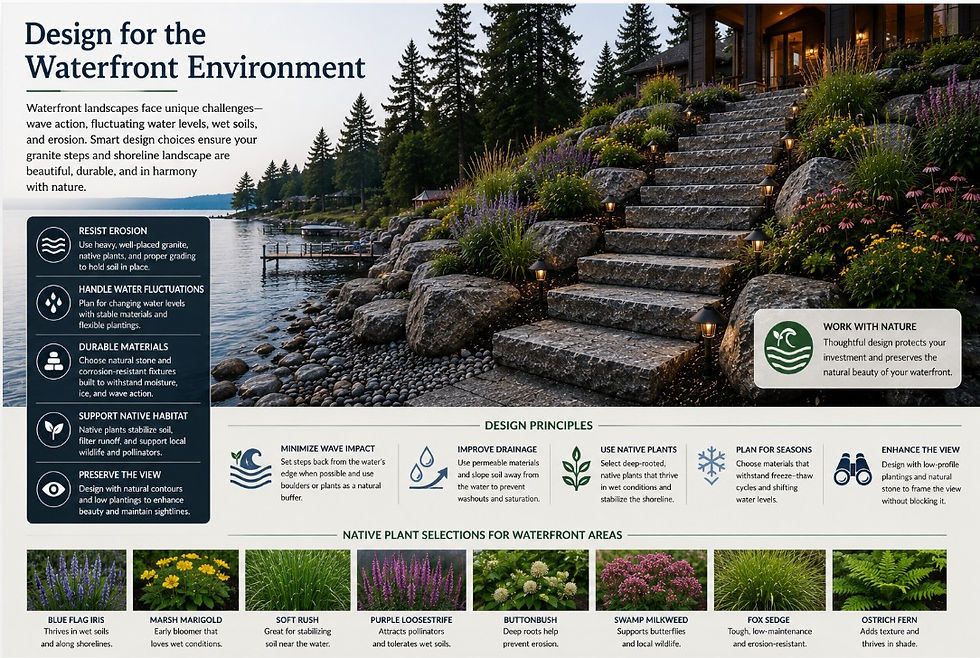
Waterfront properties require specialized planning.
Conditions often include:
freeze-thaw cycles
rocky terrain
runoff from elevation changes
shoreline moisture
unpredictable drainage behavior
What works on a suburban lot may fail on a sloped cottage property. That’s why granite step design should account for the unique challenges of waterfront living.
A properly designed system blends:
structural hardscaping
grading
drainage
retaining support
softscape stabilization
Everything works together.
Protect Your Cottage Investment with Smart Landscape Design
Granite steps add beauty, function, and lasting value to a cottage property, but erosion can quietly undermine even the most stunning installation if not addressed properly.
The best prevention strategy combines:
✔ proper grading✔ drainage control✔ retaining support✔ deep-rooted landscaping✔ professional installation✔ ongoing maintenance
At Jeff Argue Landscaping, we specialize in creating luxury cottage landscapes throughout Muskoka and Georgian Bay that are built for both beauty and performance.
From handcrafted granite steps to retaining walls, drainage solutions, softscapes, and waterfront hardscaping, our team understands how to design outdoor spaces that work with challenging terrain, not against it.
If your sloped cottage property needs granite steps or erosion control improvements, we’d be happy to help.
Contact Jeff Argue Landscaping today to discuss your vision.


