


Signs Your Cottage Landscape Has Drainage Problems

A beautiful cottage landscape should enhance your time at the lake, not create costly maintenance issues or safety concerns. In Muskoka and Georgian Bay, waterfront properties face unique drainage challenges due to sloped terrain, fluctuating water levels, heavy rainfall, and freeze-thaw cycles. Without proper drainage, water can slowly damage your landscape, shift hardscaping, and lead to expensive repairs. If you own a cottage, recognizing the warning signs early can help protect your investment.
1. Water Pooling in Certain Areas

One of the most obvious signs of drainage problems is standing water that lingers after rain.
If puddles remain on your lawn, patio, driveway, or around walkways long after rainfall has ended, your property may not be draining properly. Water should move away from structures and landscape features, not collect in low spots.
Pooling water can:
kill grass and plants
create muddy, unusable areas
attract mosquitoes
weaken patio or walkway foundations
contribute to erosion over time
On sloped cottage properties, even small grading issues can cause water to collect where it shouldn’t.
2. Soil Erosion or Washed-Out Areas

Have you noticed mulch disappearing after heavy rain? Exposed roots? Gullies forming on slopes? These are classic signs of drainage trouble. When water flows too aggressively across your property instead of being managed properly, it carries away valuable topsoil, mulch, and planting materials.
Erosion can eventually:
undermine granite steps
destabilize retaining walls
expose landscape fabric
damage plantings
alter the appearance of your property
Waterfront properties are especially vulnerable because slopes naturally accelerate runoff.
3. Shifting or Uneven Granite Steps
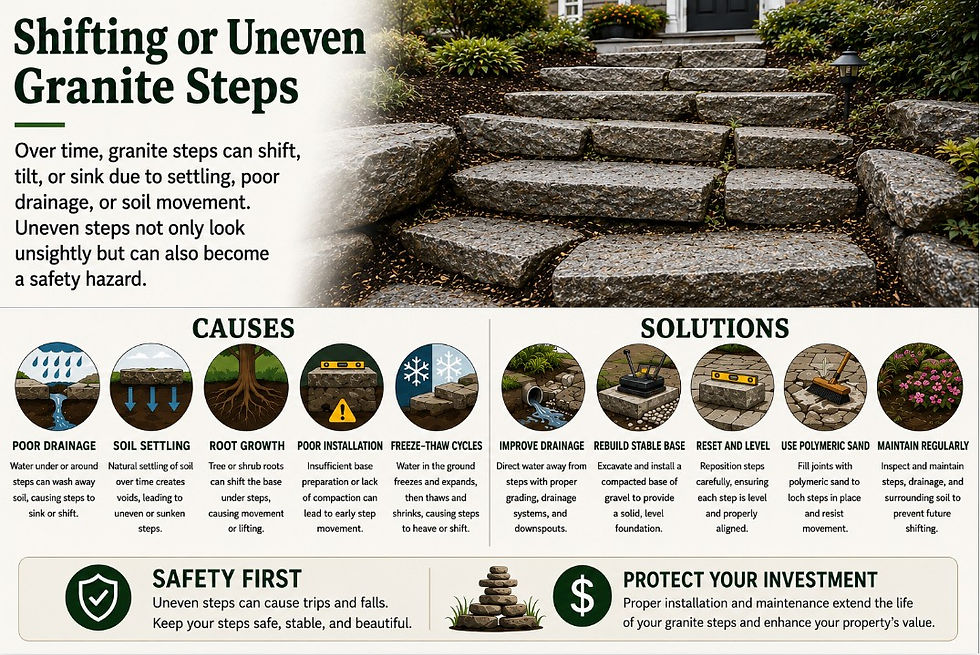
Granite steps are a premium landscape feature, but poor drainage can compromise even the best installation.
If you notice:
uneven step heights
slight movement
settling
gaps between stones
tilting steps
Water may be washing away support beneath the structure. Proper foundation preparation and drainage are critical for long-term stability. Ignoring these early warning signs can lead to more significant repairs later.
4. Retaining Walls Showing Movement

Retaining walls are designed to manage grade changes and help stabilize sloped landscapes, but water pressure behind a wall can create serious problems.
Watch for:
bulging sections
leaning walls
cracks
shifting stones
soil pushing through gaps
Hydrostatic pressure from trapped water is often the culprit. A properly designed retaining wall should include drainage considerations to relieve pressure and direct water safely away.
5. Washed-Out Mulch and Garden Beds

If your carefully installed mulch keeps ending up in the lawn, pathway, or shoreline after every storm, drainage is likely an issue. Mulch movement is often an early warning sign that runoff is flowing too quickly through your landscape.
This can eventually lead to:
exposed soil
weed growth
unhealthy plant roots
unattractive garden beds
ongoing maintenance headaches
Smart grading, edging, and strategic planting can help solve this problem.
6. Soggy Lawn or Constant Wet Ground

A lawn that always feels wet, even days after rainfall, can signal poor drainage.
Potential causes include:
compacted soil
poor grading
underground water flow issues
low spots
inadequate drainage systems
Constant saturation is unhealthy for turf and can damage plant root systems. It can also make your property less enjoyable, especially if guests are tracking mud into the cottage.
7. Downspouts Dumping Water Near Landscape Features

Roof runoff is one of the most overlooked drainage problems.
If your downspouts discharge near:
granite steps
retaining walls
patios
garden beds
cottage foundations
You may be unintentionally creating erosion and water damage.
Large roof surfaces can direct a surprising amount of water into concentrated areas during heavy rain. Redirecting runoff properly can dramatically improve drainage performance.
8. Cracks or Movement in Patios and Walkways

Stone patios and walkways rely on stable foundations.
If drainage problems exist beneath the surface, you may begin to notice:
shifting pavers
uneven walking surfaces
cracking
edge separation
sinking sections
Water infiltration combined with freeze-thaw cycles in Muskoka can make these issues worse.
Small movement today often becomes a bigger repair tomorrow.
9. Plant Health Problems
Poor drainage doesn’t only affect hardscaping, it impacts plant health too.
Signs may include:
yellowing leaves
root rot
dying shrubs
patchy turf
weak growth
Too much water suffocates plant roots, while aggressive runoff can wash away nutrients.
A well-designed softscape should balance beauty with functional drainage.
10. Shoreline Erosion Near Waterfront Areas
For waterfront properties, shoreline changes may indicate larger drainage concerns.
Watch for:
receding soil
exposed roots
washed-out edges
sediment buildup
unstable access areas
Runoff from higher portions of your property can accelerate shoreline erosion if not managed correctly.
This is especially important for sloped cottage lots.
Why Cottage Properties Face Unique Drainage Challenges
Unlike flat suburban properties, cottage landscapes often include:
significant grade changes
rocky terrain
waterfront exposure
freeze-thaw weather
natural runoff patterns
sensitive shoreline ecosystems
That means drainage design needs to be intentional, not an afterthought.
Protect Your Investment with Smart Landscape Design
Drainage issues rarely improve on their own. The earlier you address warning signs, the easier and more cost-effective the solution typically becomes. At Jeff Argue Landscaping, we design and build landscapes that combine beauty, function, and long-term durability for cottage properties throughout Muskoka and Georgian Bay.
Whether the solution involves:
yard grading
retaining walls
drainage improvements
granite step stabilization
softscape redesign
erosion control strategies
The right approach can protect your investment while preserving the natural beauty of your waterfront property. If you’ve noticed any of these warning signs, it may be time for a professional assessment.


